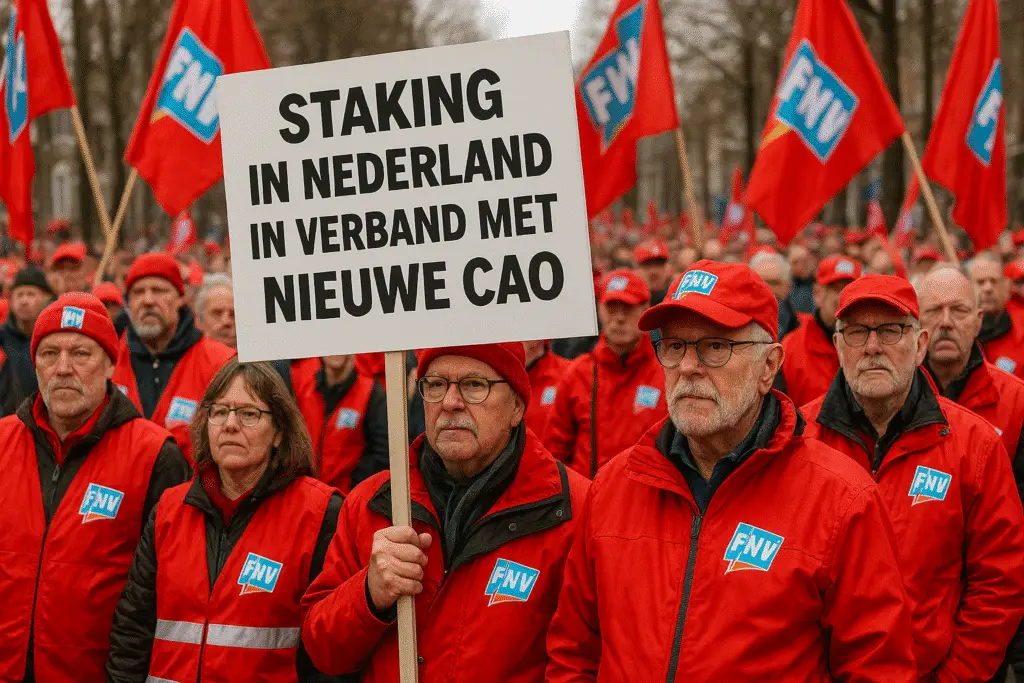
If your employer does not comply with a കൂട്ടായ തൊഴിൽ കരാർ (collectieve arbeidsovereenkomst, CAO) that binds it, you can claim what the agreement gives you, going back up to five years. The main exception: you can only enforce the agreement yourself if it applies to your employment, through union membership, a general binding declaration or an incorporation clause in your contract.
Under Article 12 of the Collective Agreements Act (Wet op de collectieve arbeidsovereenkomst, Wet CAO), a term in your employment contract that conflicts with a binding collective agreement is void. The collective agreement provision applies in its place. Wage claims go to the subdistrict court (kantonrechter), which hears every employment and collective agreement case regardless of the amount under Article 93 of the Dutch Code of Civil Procedure (Rv).
ഉള്ളടക്ക പട്ടിക
ഒരു തൊഴിലുടമ ഒരു കൂട്ടായ തൊഴിൽ കരാറിന് വിധേയമാകുന്നത് എപ്പോഴാണ്?
An employer is bound through membership of the employers’ organisation that concluded the agreement, through a general binding declaration, or through its own contracts. Each route has different consequences for what you can enforce.
Under Article 9 of the Wet CAO, members of the organisations that concluded the agreement are bound by it. A general binding declaration (algemeenverbindendverklaring, AVV) by the Minister of Social Affairs and Employment extends listed provisions to every employer and employee in the sector, members or not (Article 2 of the Act on general binding declarations, Wet AVV). Many employment contracts also contain an incorporation clause (incorporatiebeding) that declares a named collective agreement applicable.
Your employer must tell you in writing which collective agreement applies, under Article 7:655(1)(l) of the Dutch Civil Code (BW). If the contract is silent, look at the activities the company actually carries out. The scope provision (werkingssfeerbepaling) of the agreement decides whether the company falls within it, not the label the employer uses.
Under Article 14 Wet CAO, a bound employer must in principle also apply the agreement to employees who are not union members. That obligation is owed to the collective agreement parties. A non-member can enforce terms directly only if the agreement has been declared generally binding or the contract contains an incorporation clause.
What happens to a clause that undercuts the collective agreement?
It is void, and the agreement’s provision applies automatically. A signed contract is therefore no defence for an employer that pays below the agreed scale.
Article 12 Wet CAO makes the conflicting term void, and Article 13 fills gaps in the contract with the agreement’s provisions. For generally binding provisions, Article 3 Wet AVV has the same effect. The correct wage scale, allowance or notice period applies without renegotiation, and the employee can claim the difference.
The largest claims usually arise from job classification, not deliberate underpayment. An employee is placed in a lower function group than the duties justify, and the error repeats every month. Holiday allowance and pension contributions calculated on the wrong salary are then also too low.
Deviation is not always forbidden. A minimum agreement (minimum-CAO) allows terms that are better for the employee, while a standard agreement (standaard-CAO) allows no deviation either way. Some provisions expressly permit deviation in writing or at company level. Our overview of ഡച്ച് തൊഴിൽ നിയമം ഈ നിയമങ്ങൾ എങ്ങനെ പരസ്പരം യോജിക്കുന്നുവെന്ന് വ്യക്തമാക്കുന്നു.
How long does a general binding declaration apply?
A general binding declaration applies for at most two years, unless extended, and never with retroactive effect (Article 2(2) and (3) Wet AVV). It covers only the provisions listed in the decision published in the Government Gazette (Staatscourant).
A collective agreement can give itself retroactive effect for members, but the declaration cannot. A non-member in a sector covered only by the declaration is therefore bound from the date the declaration takes effect, not earlier. The Minister can grant companies with their own equivalent agreement an exemption.
When a collective agreement expires, terms that became part of a member’s individual contract continue to apply until something else is agreed. This after-effect (nawerking) is developed in case law. Provisions that applied only through a general binding declaration, by contrast, stop applying when the declaration ends. In the gap, your own contract and the statutory minimum wage remain.
What can you claim, and how far back?
You can claim the wage shortfall, a statutory increase for late payment and statutory interest. Wage claims become time-barred five years after each payment fell due (Article 3:308 BW).
Under Article 7:625 BW, wages paid late give you a statutory increase if the delay is attributable to the employer. It is 5% per working day from the fourth to the eighth working day, then 1% per working day, up to a maximum of 50% of the amount due. The subdistrict court may reduce the increase if full application would be unreasonable.
Underpaid holiday allowance and pension contributions are separate claims. Every month you wait costs you a month at the far end of the five-year period. A written demand that clearly reserves your right to payment interrupts prescription; a complaint made only in a meeting does not.
Two situations call for advice straight away. The first is where the employer disputes whether the agreement applies at all, which turns on the scope provision and the facts of the business. The second is an employer in financial difficulty; our article on പാപ്പരാകുന്ന ഒരു തൊഴിലുടമ explains your position.
What can the trade unions and collective agreement parties do?
The parties to the agreement can demand compliance and claim damages, including damages suffered by their members. That gives them remedies an individual employee does not have.
Under Article 9(2) Wet CAO, bound members must perform the agreement in good faith towards each party to it. Article 15 Wet CAO allows an organisation that concluded the agreement to claim compensation for its own loss and for the loss of its members. For generally binding provisions, Article 3(4) Wet AVV gives employers’ and employees’ organisations a comparable damages claim against non-members. Many agreements fix a penalty payable to the parties on non-compliance.
Most sectors also have a compliance body or dispute committee, and many agreements set up an interpretation committee. If the dispute is about what a provision means, that route is often faster and cheaper than court. A trade union can negotiate for you or act collectively where a whole group is affected.
What can the Netherlands Labour Authority do?
The Netherlands Labour Authority (Nederlandse Arbeidsinspectie) does not enforce collective agreements on its own initiative and cannot fine an employer for paying below the agreed scale. It investigates only at the request of the parties to a generally binding agreement.
Under Article 10 Wet AVV, those parties can ask the Minister for an investigation if they suspect non-compliance in a company, with a view to a claim under Article 3 Wet AVV. The Authority then reports what it found to the requesting organisation, which decides on civil proceedings.
Payment below the statutory minimum wage and minimum holiday allowance is different: the Authority enforces the Minimum Wage and Minimum Holiday Allowance Act (Wet minimumloon en minimumvakantiebijslag) itself and can impose fines. A collective agreement dispute is a civil claim, but an underpayment below the statutory minimum is worth reporting.
If you were hired through a chain of contractors, for example as an agency worker on a construction site, Articles 7:616a and 7:616b BW allow you to hold the client further up the chain liable for unpaid wages, subject to conditions. This route matters when your direct employer has disappeared.
ഒരു ജീവനക്കാരൻ എന്ന നിലയിൽ നിങ്ങൾ എന്താണ് പരിശോധിക്കേണ്ടത്?
Most claims are won or lost on the paperwork. Check these points before you raise the issue:
- Which collective agreement your contract or the written statement under Article 7:655 BW names, and whether you are a union member.
- Whether the agreement has been declared generally binding, and for which period, in the Government Gazette.
- Your function group: compare your actual duties with the function descriptions in the agreement.
- Your payslips month by month against the wage table that applied in each period.
- Holiday allowance, overtime pay, shift allowances and pension contributions calculated on the correct wage.
- The oldest month you can still claim, given the five-year limitation period.
ഒരു തൊഴിലുടമ എന്ന നിലയിൽ നിങ്ങൾ എന്താണ് പരിശോധിക്കേണ്ടത്?
Exposure builds up month by month, so early checks limit back-pay claims. Check:
- Whether you are bound through membership, a general binding declaration or an incorporation clause in your contracts.
- Whether your actual activities fall within the scope provision of the sector agreement.
- Whether each employee’s function group matches the duties actually performed.
- Whether you apply the agreement to non-members as Article 14 Wet CAO requires.
- Whether contract terms deviate from a standard agreement, which makes them void.
- Whether the written statement to new employees names the applicable agreement.
What should you do if your employer ignores the collective agreement?
Build a calculation, put it to your employer in writing with a deadline, and go to court if that fails. Keep the five-year limitation period in view throughout.
Download the version of the agreement that applied in each period, with its wage table and function descriptions. Reconstruct month by month what you were paid and what you should have been paid, using payslips. A calculation a judge can follow carries more weight than arguments about fairness.
Many cases are payroll or classification errors and settle once the employer sees the figures. If not, involve your trade union or the sector dispute committee. Raising a collective agreement claim is not a valid ground for dismissal. The last step is a claim before the subdistrict court. Our ഡച്ച് തൊഴിൽ നിയമ ഗൈഡുകളുടെ സൂചിക ചുറ്റുമുള്ള നിയമങ്ങൾ ഉൾക്കൊള്ളുന്നു.
What can we do for you with a collective agreement dispute?
നിങ്ങളുടെ തൊഴിൽ അഭിഭാഷകൻ, we deal with every step of a collective agreement dispute, for employees and for employers:
- We establish which collective agreement applies and whether it binds your employment.
- We compare the duties with the function descriptions and assess the correct function group.
- We calculate the wage shortfall, the statutory increase under Article 7:625 BW and statutory interest.
- We draft a written demand that interrupts the five-year limitation period.
- We negotiate with the other side or the trade union and record any settlement.
- സബ് ഡിസ്ട്രിക്റ്റ് കോടതിയിൽ ഞങ്ങൾ അവകാശവാദം കൊണ്ടുവരികയോ പ്രതിരോധിക്കുകയോ ചെയ്യുന്നു.
ചുരുക്കം
- A contract term that conflicts with a binding collective agreement is void (Article 12 Wet CAO); the agreement’s term applies instead.
- You can enforce the agreement through union membership, a general binding declaration or an incorporation clause.
- Wage claims expire five years after each payment fell due (Article 3:308 BW); interrupt prescription in writing.
- Late wages carry a statutory increase of up to 50% (Article 7:625 BW), which the court can reduce.
- The Labour Authority investigates only at the request of the collective agreement parties (Article 10 Wet AVV).
പതിവു ചോദ്യങ്ങൾ
What is a collective labour agreement (CAO) and what does it cover?
A collective labour agreement (CAO) is a written agreement between one or more employers or employers’ organisations and one or more trade unions. It sets terms such as wages, working hours, allowances, notice periods and pension arrangements for the employees it covers.
Does a collective labour agreement apply to every employer in a sector?
Only if the Minister of Social Affairs and Employment has declared it generally binding, and then only for the provisions listed in the decision. Otherwise it binds members of the organisations that concluded it, and employers whose contracts incorporate it.
ഒരു തൊഴിലുടമ കൂട്ടായ തൊഴിൽ കരാർ പാലിക്കുന്നില്ലെങ്കിൽ എന്ത് സംഭവിക്കും?
The employee can claim the difference as unpaid wages before the subdistrict court, because a conflicting contract term is void under Article 12 Wet CAO. The parties to the agreement can claim damages. The Netherlands Labour Authority investigates only at their request.
ഒരു പുതിയ കൂട്ടായ തൊഴിൽ കരാറിന് മുൻകാല പ്രാബല്യം ലഭിക്കുമോ?
The parties can give the agreement retroactive effect for their members. A general binding declaration, however, never has retroactive effect under Article 2(3) Wet AVV, so non-members are bound only from the date the declaration takes effect.
How far back can I claim underpaid wages?
Five years from the date each payment fell due, under Article 3:308 BW. A written demand that clearly reserves your right to payment interrupts that period, so send one before older months expire.